Human success is built on collaboration and collective learning
Human history as species offers an interesting perspective on this.
We did not become the most successful species on the planet because individual humans were particularly strong, fast or intelligent. Our success was built on our ability to make observations together, share experiences, pass knowledge from generation to another, and build a shared understanding of the world around us. From the very beginning adaptation has been a collective phenomenon.
The individual is important, but it is the community that enables individual characteristics to become knowledge, skills to accumulate, and ways of working to evolve. This logic has not disappeared. It has simply moved from caves to offices.
An organization’s adaptability is built on shared understanding
Organizations operate in an environment where no one sees the whole picture alone. Someone working at the customer interface encounters one kind of reality. A technology expert looks at things from another perspective. Leadership sees the bigger picture that others may not necessarily notice. Each person has access to only part of the information needed to understand a changing situation.
For this reason, an organization’s ability to adapt is not built on individual expertise alone, but on how well these separate observations come together to form a shared understanding. Shared understanding becomes particularly important when organizations need to respond quickly to change and make high-quality decisions amid uncertainty.
Collaboration at work is more than sharing information
At its best, collaboration is much more than sharing information or coordinating work. It is how a community develops its understanding of reality: a mechanism through which people complement each other’s perspectives, recognize the limits of their own mental models, and collectively build an understanding that no one could reach alone.
Collaboration is the foundation of organizational learning. It enables dispersed knowledge to become a shared perspective and the capacity to act in changing situations.
A reflective approach strengthens collective learning
At the heart of change is a particular way in which individuals relate to themselves and to one another: reflection. When people pause together to examine their observations, experiences, and assumptions, individual experiences begin to develop into collective learning. This is where the ability to recognize what we have learned, where our thinking has been limited, and in what dicretion we should develop together emerges.
A reflective approach helps organizations turn experiences into knowledge and knowledge into practical development. At the same time, it supports the development of a learning organization. Read more about the importance of reflection in the future of work.
AI at work increases the importance of collaboration
In the age of AI, the importance of collaboration becomes even more pronounced. We have previously explored why AI expands individual capacity, but at the same time, the importance of shared understanding increases. The importance of collaboration increases in the age of AI.
Every employee can produce more information, analyses, and perspectives than ever before. At the same time, there is a growing need to understand what all of this means from the perspective of our customers, teams and organization. This work happens between people: in reflective conversations, shared consideration, and the ways in which people build understanding together.
While AI at work makes information processing more efficient, an organization’s true competitive advantage still comes from people’s ability to create shared meaning and make decisions together.
Subject matter by Ville Ojanen
(Lead Psychologist at Academy of Brain)
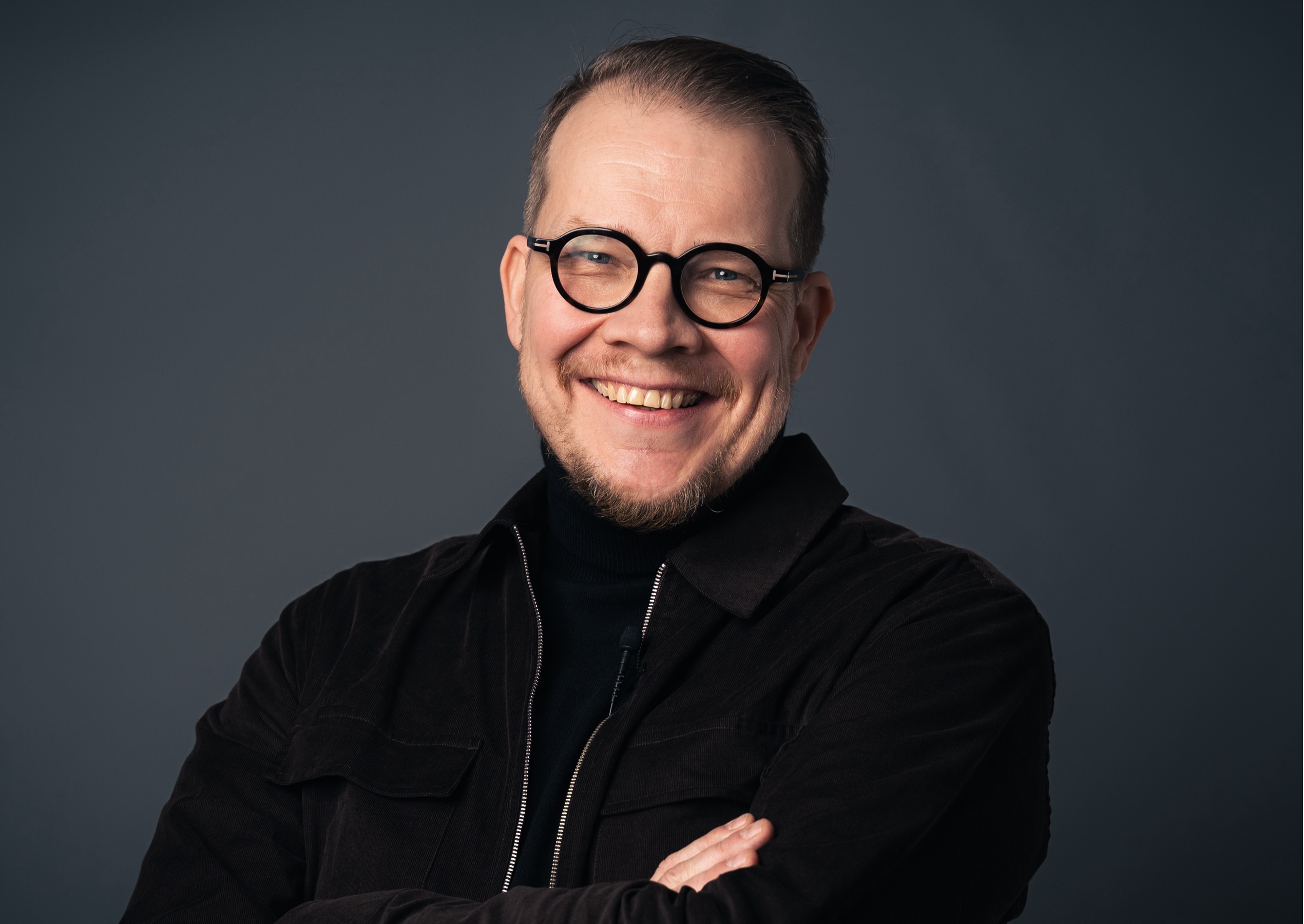
Ville Ojanen is a psychologist with a doctorate in cognitive neuroscience. His passion is understanding and influencing the human behavior. Ville combines an exceptionally broad and in-depth understanding of behavioral and neurosciences with practical experience in developing individuals, teams and communities.
He has worked as a clinical neuropsychologist, as an HR professional in Nokia and for fifteen years as an organizational psychologist, coach and keynote speaker. Ville is a serial entrepreneur and the co-founder of Academy of Brain Ltd. He has served in the behavioral science advisor team of the Finnish Prime minister´s office since 2020, currently as a steering group member.